


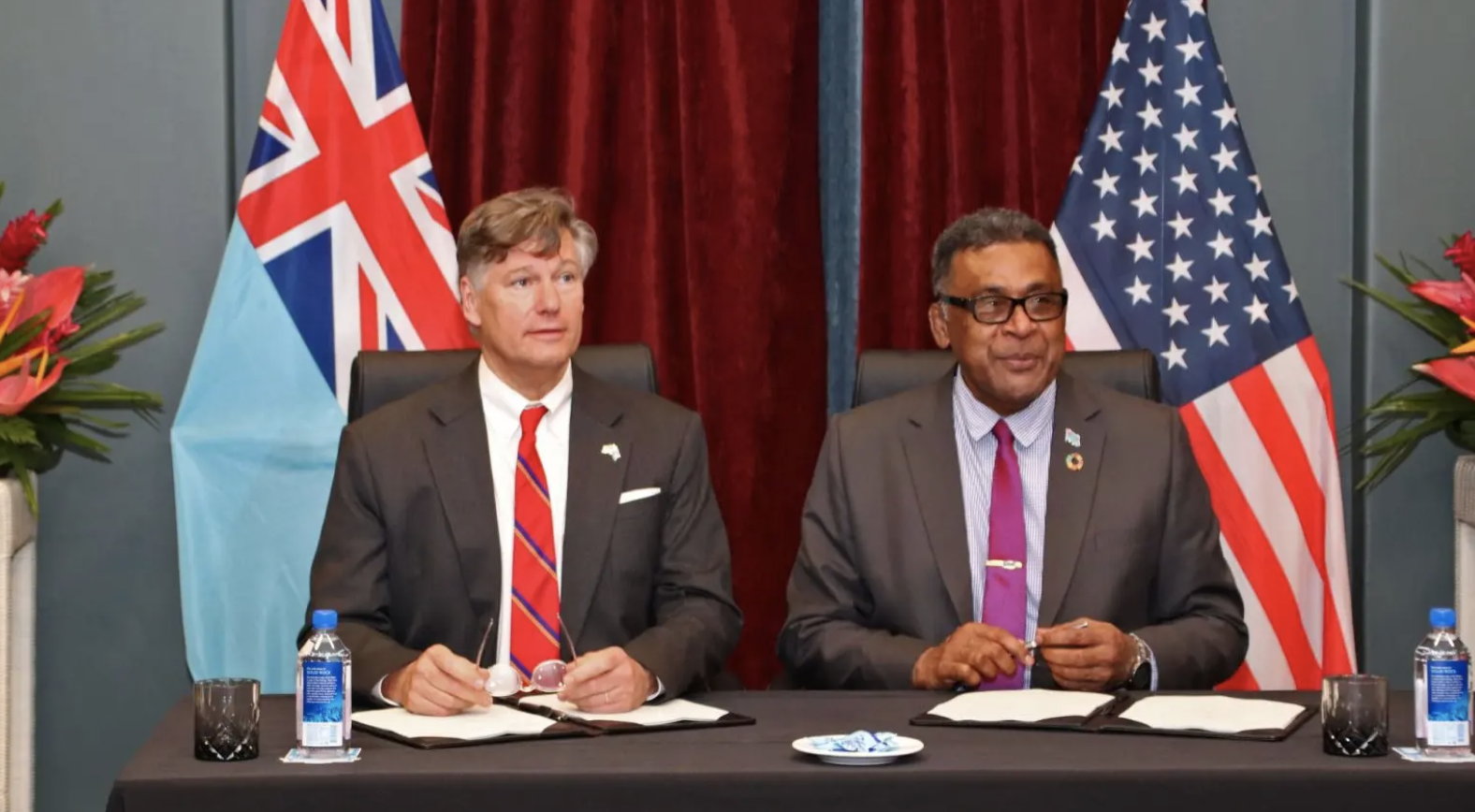
Fiji and the United States have taken a step toward expanding economic cooperation following the signing of a development funding agreement designed to support private sector growth and attract new investment into the Pacific island nation.
The Compact Development Funding Agreement was signed in Suva by United States Deputy Secretary of State Christopher Landau and Fiji’s Minister for Finance, Commerce and Business Development Esrom Immanuel. The agreement begins a process to identify and develop projects aimed at strengthening Fiji’s economy while creating opportunities for greater trade and commercial engagement with American companies.
Under the arrangement, technical teams from both sides will work together to analyse key constraints to economic growth and design programmes that can address them. The initiative forms part of the United States’ Millennium Challenge Corporation compact development process, which supports economic reform, infrastructure improvements and policy changes intended to encourage investment and economic expansion.
Fiji was selected in 2025 to begin developing a compact programme after being recognised for its reform efforts and its role as a regional centre for transport, business services and workforce development in the Pacific.
Officials say the agreement signals deeper economic engagement between the two countries at a time when Pacific island economies are seeking to diversify growth and strengthen connections with global markets. The planned compact will examine priority sectors where investment and policy reforms could unlock new opportunities for businesses and improve the operating environment for investors.
Projects emerging from the process may focus on areas such as infrastructure development, improving the business climate and modernising economic systems to reduce costs and risks for investors.
The Millennium Challenge Corporation, an independent agency of the United States Government, uses multi-year grant agreements to support economic development initiatives in partner countries. These programmes typically address structural barriers to growth while promoting private sector activity and job creation.
The organisation has been increasing its engagement in the Pacific region, with programmes underway or under development in countries including Solomon Islands, Kiribati and Tonga.
For Fiji, the agreement marks the start of a detailed planning phase that could lead to a full compact programme aimed at strengthening economic resilience, attracting foreign investment and supporting long-term development across key sectors of the economy.