


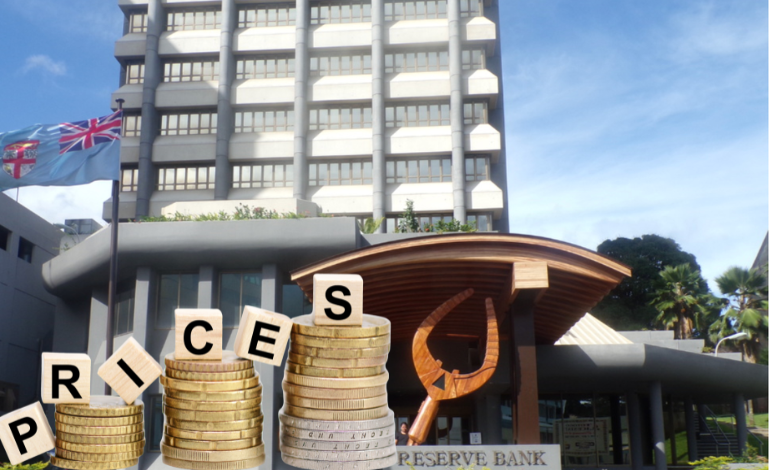
Fiji’s central bank has kept its key policy interest rate unchanged as higher fuel and freight costs continue to feed through the economy, creating additional cost pressures for businesses and households.
The Reserve Bank of Fiji has maintained its Overnight Policy Rate at 0.25 per cent, balancing the need to support economic activity against inflationary pressures largely driven by higher imported costs.
The RBF Board decided to leave the rate unchanged at its meeting on 27 August.

RBF Governor Ariff Ali.
Governor and Board Chairman Ariff Ali said the decision reflected the need to continue supporting economic activity while maintaining adequate foreign reserves.
Headline inflation stood at 5.7 per cent in July, easing slightly from 6.1 per cent in June but substantially higher than the negative 1.5 per cent inflation recorded a year earlier.
Higher fuel, gas and kerosene prices accounted for around 2.8 percentage points of July’s inflation rate, according to the Reserve Bank.
The RBF expects inflation to remain elevated in coming months as higher global fuel prices and freight costs work their way through domestic prices.
The trend is particularly relevant for Fiji businesses because the country’s dependence on imported fuel and goods means changes in international commodity prices and transport costs can quickly flow into operating expenses.
Businesses dependent on transport, tourism, manufacturing, construction and imported raw materials are among those likely to feel the effects most directly.
The Reserve Bank has so far resisted responding to supply-driven inflation by increasing its policy rate, which would raise borrowing costs and potentially slow investment.
Its 0.25 per cent rate continues a policy stance designed to support domestic demand and economic activity while foreign reserves remain comfortable.
The challenge is that many of the factors driving the current bout of inflation lie outside Fiji.
International energy prices and freight charges cannot easily be influenced by domestic monetary policy. Higher rates could therefore suppress business investment and household demand without necessarily addressing the underlying source of price increases.
For businesses, the coming months will require careful management of energy, freight and inventory costs.
The Reserve Bank’s decision provides continuity on borrowing costs, but its latest assessment indicates that imported inflation will remain one of the principal economic risks facing Fiji in the near term.