


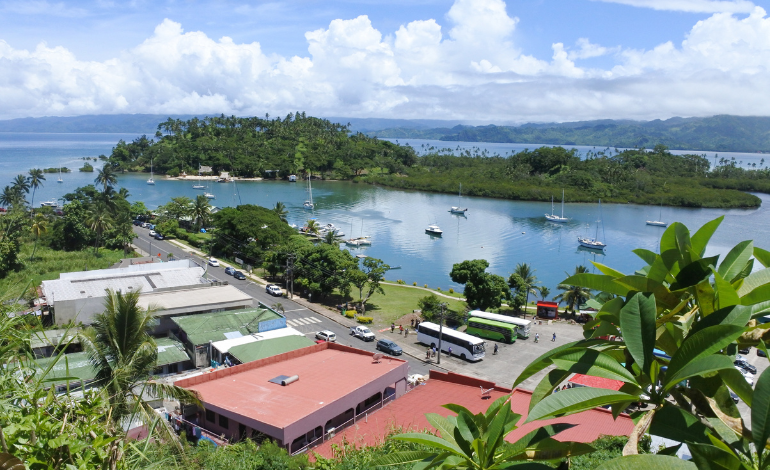
Vanua Levu, Fiji’s second-largest island, is drawing increasing interest from investors, tourism operators and community firms as the country looks to broaden its economic base beyond Viti Levu and deepen the contribution from sustainable tourism and enterprise in 2026.
A multi-stage development blueprint under the Na Vualiku Tourism Development Programme, backed by the World Bank and Government of Fiji, aims to transform infrastructure, services and market appeal across Vanua Levu and nearby Taveuni. The programme’s initial phase focuses on upgrading key transport links such as the Savusavu and Labasa airports and the 95-kilometre Labasa-Savusavu cross-island road, while also supporting essential services including waste, wastewater and medical facilities. These investments are designed to tackle longstanding barriers to growth, reduce operational costs for operators and unlock year-round visitor flows.
Tourism is a central pillar of Fiji’s broader economy, contributing around 40 percent of GDP and supporting roughly one-third of jobs nationwide. Visitor arrivals reached approximately 823,000 by October 2025, with strong markets in Australia, New Zealand, the United States and Europe helping to sustain demand despite global headwinds.
Local business owners in Savusavu and Labasa report rising bookings, more direct inquiries from international tour operators and reinvestment in facilities such as boutique hotels, dive operations and cultural experiences. “We’re finally seeing year-round interest rather than purely seasonal peaks,” said a tourism services manager in Savusavu, who is preparing to scale up staff and amenities in 2026. “Improved access and infrastructure plans are key to this confidence.”
Investors are also watching closely. Several boutique resort projects have secured land and begun design work, while local entrepreneurs have launched guesthouses, transport services and adventure tourism startups. The expected infrastructure upgrades are viewed as critical to reducing travel times and costs, helping tourism-dependent small and medium enterprises to compete.
Government and private-sector leaders emphasise that Vanua Levu’s development could contribute meaningful gains to Fiji’s GDP trajectory at a time when national growth is expected to average around 2.6 percent in 2026.
With tourism earning, infrastructure investment and local enterprise converging, Vanua Levu’s profile as a growth frontier appears increasingly credible, blending community benefits with rising investor interest and expanded economic opportunity.