


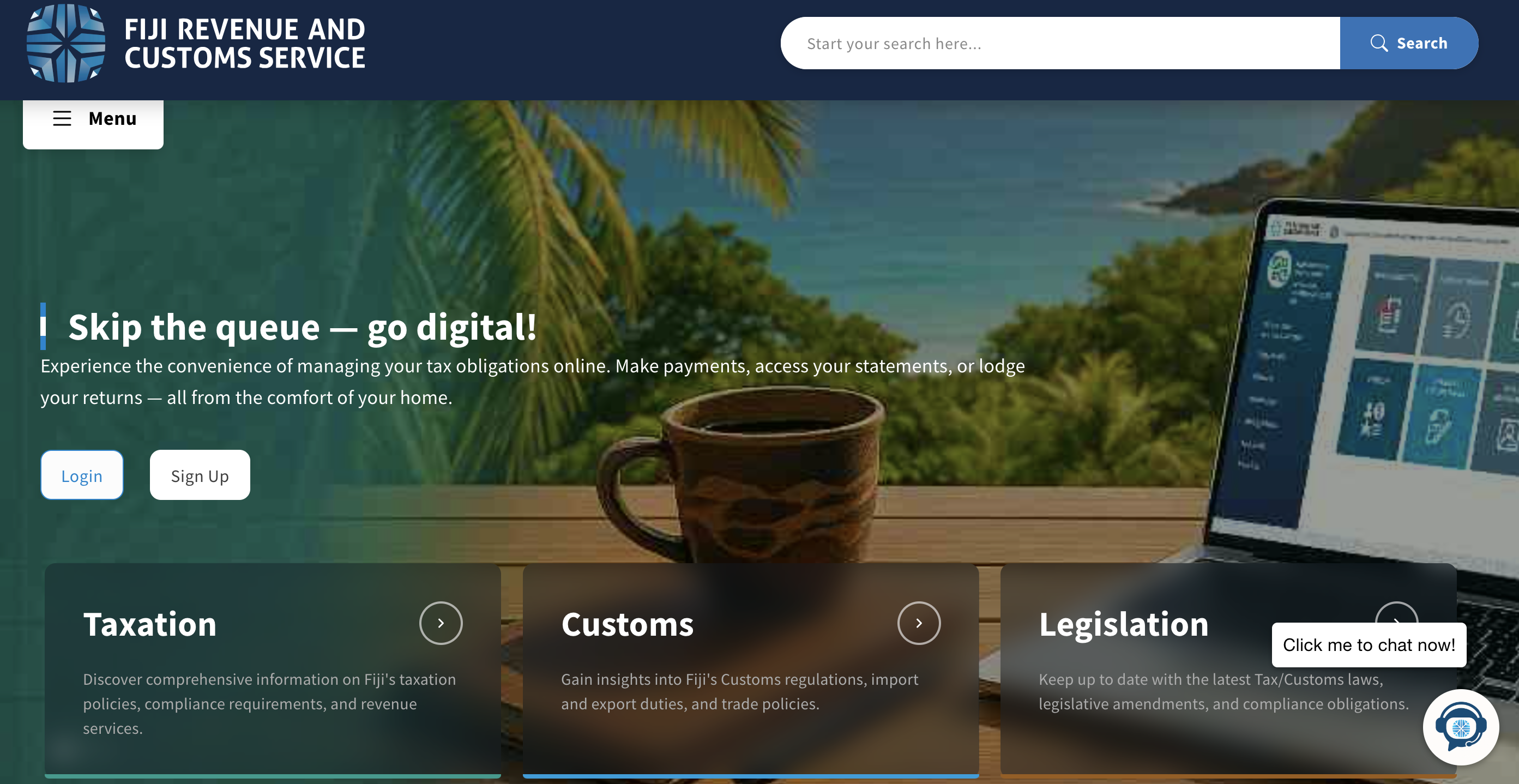
Fiji has taken a significant step in modernising its tax administration with the launch of a new digital platform by the Fiji Revenue and Customs Service, developed with support from Australia to improve compliance, accessibility, and the ease of doing business.
Launched in Suva at the end of March 2026, the upgraded website introduces a more user-friendly interface, enhanced self-service features, and an integrated chatbot to assist businesses and individuals in navigating tax requirements more efficiently. The platform is designed to streamline processes such as registration, filing, and payments, reducing administrative friction and improving engagement with the tax authority.
Minister for Finance and Economy, Esrom Immanuel, described the initiative as part of a broader reform agenda aimed at strengthening public service delivery.
“This is not simply about unveiling a new website, but reflects the steady progress FRCS is making in modernising its services,” he said.
He added that improved access to information would support voluntary compliance, noting that when guidance is easier to understand, businesses are more likely to meet their obligations.
Australia played a direct role in the development of the platform. The Minister acknowledged support from the Australian Government and the Australian Taxation Office, which contributed technical expertise and advisory input to enhance the system’s structure and usability.
FRCS Chief Executive Udit Singh said the upgrade reflects the organisation’s ambition to operate as a modern, service-oriented revenue authority, aligned with international best practice. The platform includes improved navigation, smarter search functionality, and 24-hour digital assistance, allowing taxpayers to access services more efficiently.
The reform is part of Fiji’s wider push toward digital government and stronger revenue systems, as it balances fiscal pressures with the need to support business activity. Improved compliance and transparency are seen as critical to maintaining sustainable revenue without increasing the burden on compliant businesses.
While smaller firms may face an adjustment period, the long-term benefits are clear. Faster processing, clearer guidance, and reduced compliance costs are expected to strengthen the overall business environment.
The collaboration with Australia also highlights the role of regional partnerships in supporting institutional capacity-building, positioning Fiji for a more efficient and digitally enabled economic future.