


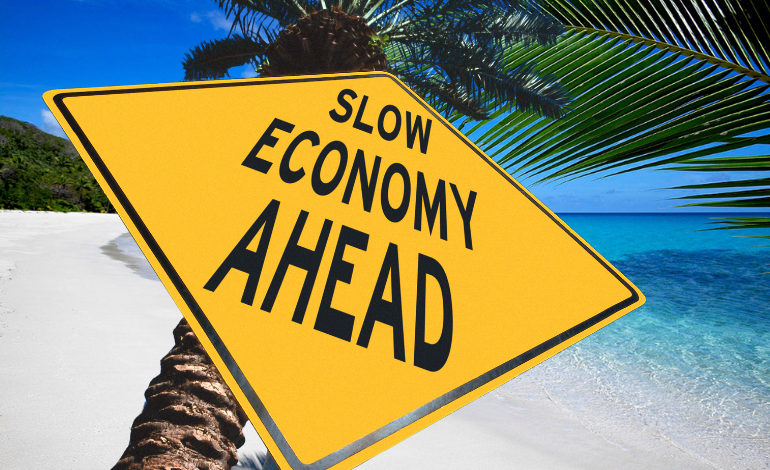
The Asian Development Bank has lowered its economic growth forecast for Fiji, predicting expansion of 2.2 per cent in 2026 and 1.9 per cent in 2027 as the strong post-pandemic recovery gives way to more moderate growth.
The revised outlook highlights the challenge Fiji faces in generating new sources of economic activity after several years in which tourism led the country’s recovery.
Fiji’s economy rebounded strongly after international borders reopened, but the recovery effect has progressively diminished as visitor numbers returned to and then surpassed pre-pandemic levels.
The ADB’s revised forecast suggests Fiji will increasingly need private investment, productivity improvements and diversification to maintain economic momentum.
Tourism remains central to the economy, but sectors such as construction, agriculture, business services, manufacturing, technology and renewable energy are becoming more important in determining the medium-term outlook.
The slower growth projection does not necessarily indicate contraction. Rather, it reflects an economy moving from exceptional post-COVID growth towards a more normal rate of expansion.
For businesses, conditions remain mixed. Tourism numbers and construction activity have remained relatively strong, while investment continues in hotels, infrastructure and other projects. At the same time, businesses are dealing with higher operating costs, labour shortages, shipping disruptions and competition for skilled employees.
The situation is particularly relevant to Australian companies given the scale of bilateral commercial links.
Australia remains Fiji’s largest source of tourists and an important trading and investment partner. Australian companies are active across banking, professional services, infrastructure, tourism, logistics, retail and other sectors.
The outlook also places additional importance on reforms aimed at encouraging investment and making it easier to do business.
Fiji is seeking increased private-sector participation in major projects while also looking at new areas of economic activity including sustainable finance, renewable energy and the digital economy.
The ADB downgrade therefore provides a useful reminder that Fiji’s next stage of growth will depend less on the rebound from the pandemic and more on sustained investment and improvements in productivity.